
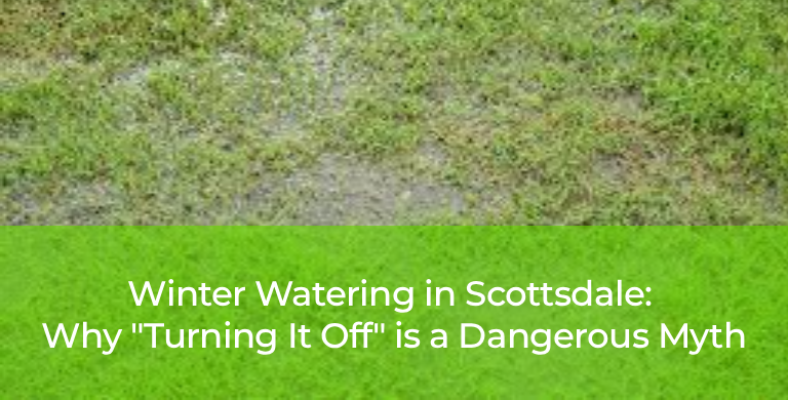
As the temperatures finally drop in the Valley of the Sun, many homeowners feel a sense of relief. The AC turns off, the windows open, and the instinct is to walk into the garage and turn the irrigation controller to “OFF.”
Stop.
While it is true that your landscape needs significantly less water in December and January than it did in July, cutting off the supply completely is a recipe for disaster. The dry winter air and lack of consistent rainfall in the Sonoran Desert mean that your plants—even the dormant ones—still require hydration to survive until spring.
If you turn the water off now, you might save $50 this month, but you will spend $2,000 replacing dead shrubs and reseeding patchy turf in April.
Here is your definitive guide to the perfect Winter Watering Schedule for Scottsdale lawns and landscapes.
The Myth of Dormancy: Brown Does Not Mean Dead
If you have Bermuda grass (the standard summer grass in Arizona), it goes “dormant” in the winter, turning a golden-brown color. Many people assume dormant means dead. It is not.
Think of dormancy as hibernation. The roots are still alive underground, storing energy for the spring “green up.”

If you let the soil completely dry out (desiccate) during the winter, the root system will shrink and die. This is called “winter kill.” When spring arrives, your lawn will come back patchy, weak, and defenseless against weeds.
The Bermuda Strategy:
-
Frequency: Water roughly once every 10 to 14 days.
-
Depth: Water deeply (to a depth of 6-8 inches) to keep the root crown hydrated without encouraging rot.
The Strategy for Winter Rye (Overseeded Lawns)
If you went through the expense of overseeding with Winter Rye, your lawn is fully active and green. However, the rules have changed since the germination period in October.
In cooler weather, evaporation rates plummet. You do not need to water every day.
-
Frequency: Every 3 to 7 days, depending on rainfall and soil type (clay holds water longer).
-
Time: Move your water window to mid-morning (9:00 AM – 10:00 AM).
Why change the time? Watering at night or early morning (2:00 AM) during winter promotes Fungal Disease. Cold, wet grass that sits in the dark develops mold and slime. Watering mid-morning allows the sun to dry the grass blades while the soil absorbs the moisture.
[IMAGE KEYWORD: winter rye grass with frost scottsdale]
Citrus and Native Trees: The “Silent” Thirst
Your native trees (Mesquite, Palo Verde, Ironwood) slow down their growth in winter, but they do not stop drinking completely.
Citrus Alert: This is a critical time for Grapefruit, Orange, and Lemon trees. Winter watering directly affects the quality and juiciness of the fruit harvest. Inconsistent water now can cause fruit to split, dry out, or drop prematurely.
-
Citrus Schedule: Deep soak every 14-21 days.
-
Native Trees: Deep soak every 21-30 days.
The “Seasonal Adjust” on Your Controller
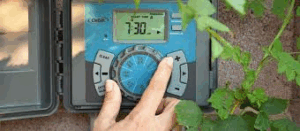
If you have a modern controller or a Smart Irrigation System (like Hunter Hydrawise), you don’t necessarily need to reprogram every single zone from scratch.
Look for the % Adjust or Seasonal Adjust feature.
-
Summer Setting: 100%
-
Winter Target: Reduce to 30% – 50%.
This automatically scales down the run times for all zones, keeping the ratios correct but reducing the total volume.
The “Rain Delay” Opportunity
Winter provides our best opportunity for free water. When we receive a winter storm, it is crucial that your Rain Sensor is working.
A functioning rain sensor will interrupt the circuit, preventing your sprinklers from running during a storm. This is not just about saving money; it’s about compliance. Spraying water during a rainstorm is a surefire way to get a violation letter from your HOA or the City of Scottsdale.
If your sprinklers run while it’s raining, your sensor is likely broken or the battery is dead.
[IMAGE KEYWORD: wireless rain sensor irrigation roof mount]
Freeze Protection Warning
Occasionally, Scottsdale temps drop below freezing. Water expands when it freezes. If your system runs during a hard freeze, you risk:
-
Slip and Fall Liability: Creating an ice skating rink on the sidewalk.
-
Broken Heads: Ice forming inside the pop-up seals.
Pro Tip: If a freeze warning is issued, turn the system to “System Off” for 24 hours. Your plants will be fine; your pipes will thank you.
Don’t Guess—Verify
Winter is actually the perfect time for an Irrigation Repair & Audit. Since the demand on the system is lower and the plants aren’t heat-stressed, we can inspect valves, repair leaks, and optimize your schedule without risking the landscape.
Is your timer set correctly for the winter drop? Don’t risk root rot from overwatering or winter kill from underwatering.
Contact Conserva Irrigation of Greater Scottsdale today. We will calibrate your system for the season, ensuring you save money on your water bill while keeping your landscape healthy for the spring rebound.